⚡ Critical Safety Notice
If your vehicle loses power suddenly while driving uphill, especially on highways or steep grades, this can be dangerous. Have the vehicle inspected by a qualified mechanic before undertaking long journeys. Do not attempt to overtake or merge into fast traffic until the issue is resolved.
1 Understanding the Problem
When a Mitsubishi Chariot (also sold as Space Wagon or Nimbus) cannot accelerate or "pick up speed" while driving uphill, the engine is failing to produce sufficient torque under increased load. Going uphill demands significantly more engine power than flat-road cruising. The root cause typically falls into one of five categories: air intake restriction, fuel delivery failure, ignition misfire, exhaust blockage, or sensor malfunction.
Figure 1: Why uphill driving exposes hidden engine problems that may not appear on flat roads.
2 Quick Diagnostic Flowchart
Follow this step-by-step diagnostic sequence to isolate the fault efficiently:
3 Common Causes & Symptoms
🔴 Clogged Catalytic Converter
MOST LIKELYThe most common cause of uphill power loss. A partially blocked converter creates exhaust back-pressure, choking the engine under high load.
- Power loss only under heavy acceleration or uphill
- Engine feels "choked" or restricted
- Exhaust feels weak or unusually hot at tailpipe
- Possible P0420 code
- Engine may overheat
🟡 Weak Fuel Pump / Clogged Filter
VERY COMMONThe in-tank fuel pump or inline filter may not supply sufficient fuel volume at high demand. Going uphill increases fuel demand significantly.
- Hesitation when pressing accelerator
- Engine sputters at high RPM
- May stall under heavy load
- Longer cranking time to start
- Whining noise from fuel tank area
🟡 Dirty / Clogged Air Filter
COMMONA restricted air filter limits the volume of air entering the engine, creating a rich mixture and reducing power output.
- Reduced acceleration on all terrains
- Black smoke from exhaust (rich mixture)
- Decreased fuel economy
- Easy fix — inspect first!
🟡 Ignition System Fault
COMMONWorn spark plugs, faulty ignition coils, or distributor issues cause misfires. Under load, misfires become more pronounced.
- Engine jerking or shaking under acceleration
- Check Engine Light flashing (misfire detected)
- Codes P0300–P0304
- Reduced fuel economy
🟢 Vacuum Hose Leaks
CHARRIOT-SPECIFICMitsubishi Chariot models are known for dry-rotted vacuum hoses. Leaks cause unmetered air entry, leading to lean mixtures and power loss.
- Hissing sound from engine bay
- Rough idle that smooths with throttle
- Code P0171 (System Too Lean)
- Especially check hoses near intake manifold
🟢 Faulty Sensors
POSSIBLEMAF, TPS, or Oxygen sensors sending incorrect readings can cause the ECU to deliver wrong fuel/air mixture under load.
- Erratic idle
- Poor throttle response
- Specific sensor-related DTCs
- May not show symptoms at light load
4 System Diagrams
4.1 Exhaust System & Catalytic Converter
A clogged catalytic converter is the leading cause of uphill power loss. The diagram below shows the exhaust flow path. When the catalytic converter's internal matrix becomes blocked with carbon deposits, exhaust gases cannot escape freely, creating back-pressure that prevents the engine from breathing properly.
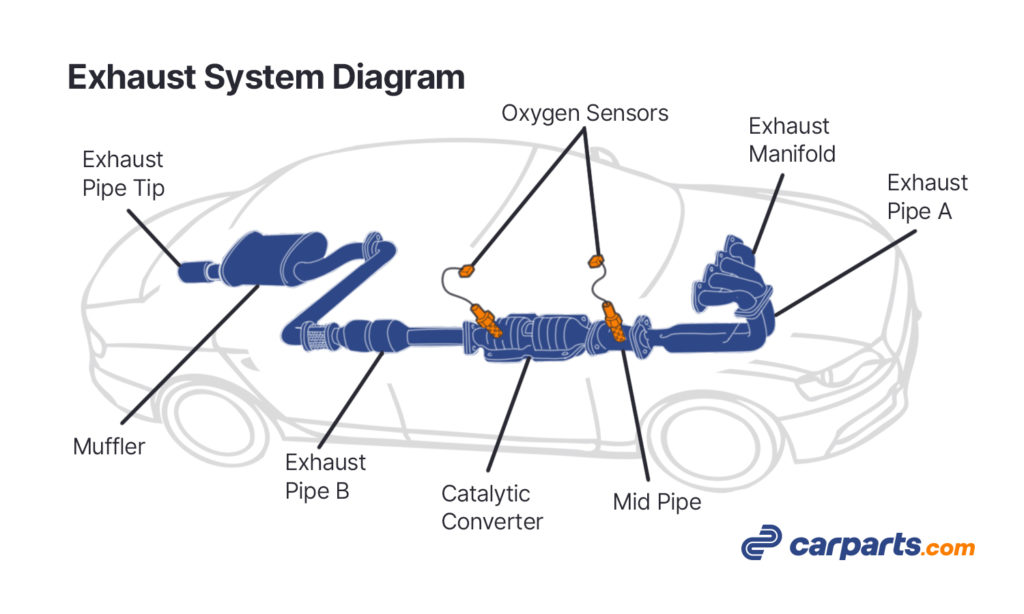
Figure 2: Exhaust system layout showing the catalytic converter location. A blockage here creates back-pressure that chokes engine power.
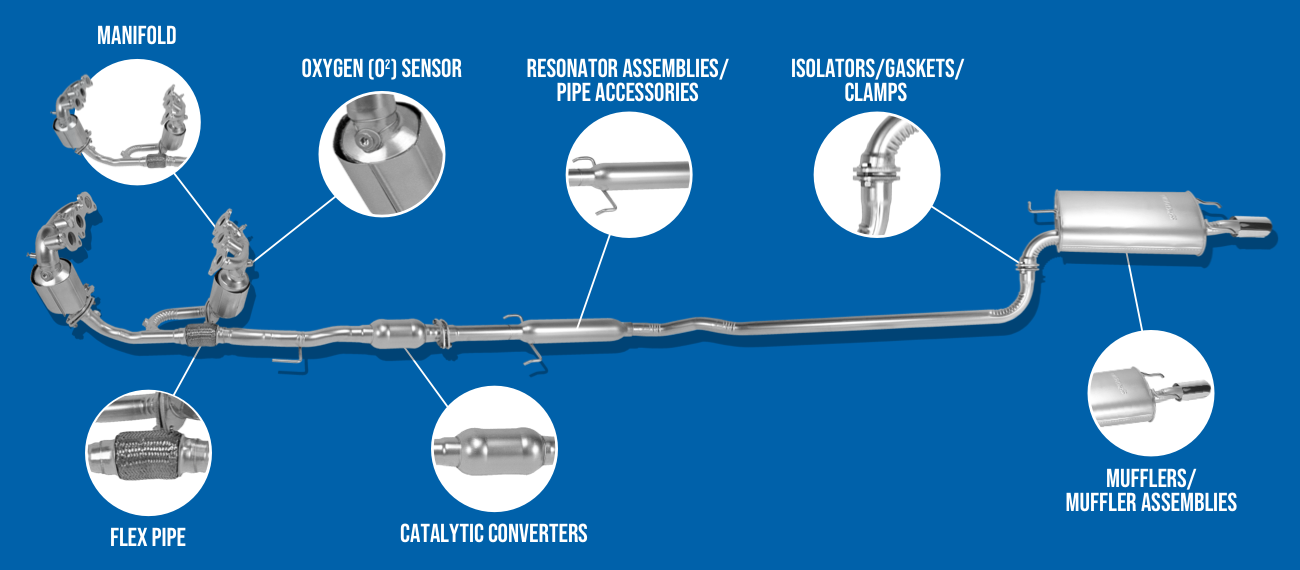
Figure 3: Detailed exhaust component diagram. The catalytic converter is positioned after the exhaust manifold and before the muffler.
4.2 Fuel System
The fuel system must deliver adequate pressure and volume. A weak pump or clogged filter starves the engine during high-demand situations like uphill driving.
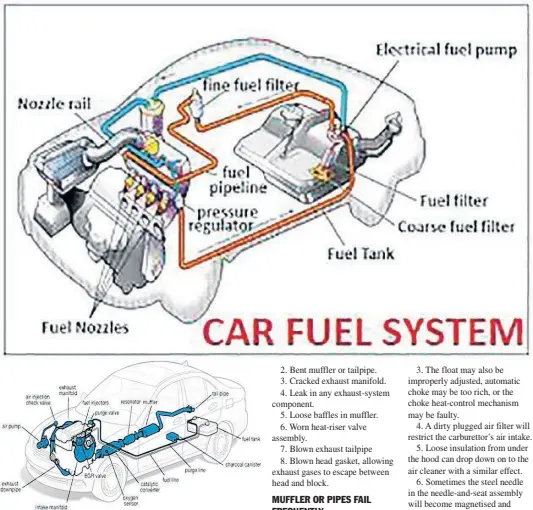
Figure 4: Complete fuel system diagram showing the fuel tank, pump, filter, pressure regulator, and injectors.
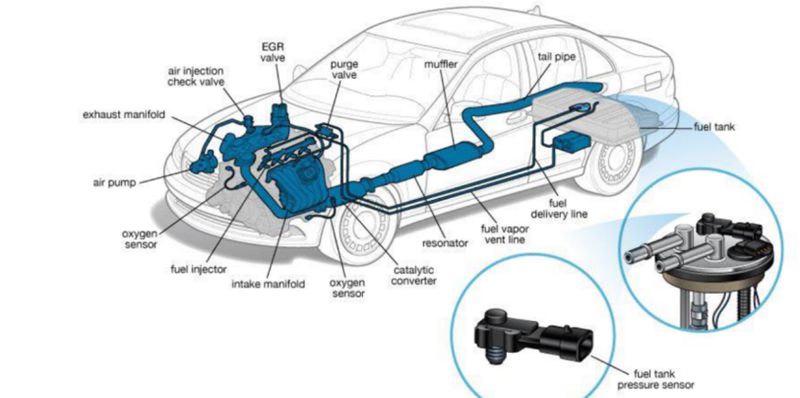
Figure 5: Fuel system components in a typical vehicle. Check the fuel filter and in-tank pump first on the Chariot.
4.3 Ignition System
Worn spark plugs or failing ignition coils cause misfires that are most noticeable under engine load. The Chariot uses a distributor-based or coil-on-plug ignition depending on the year.
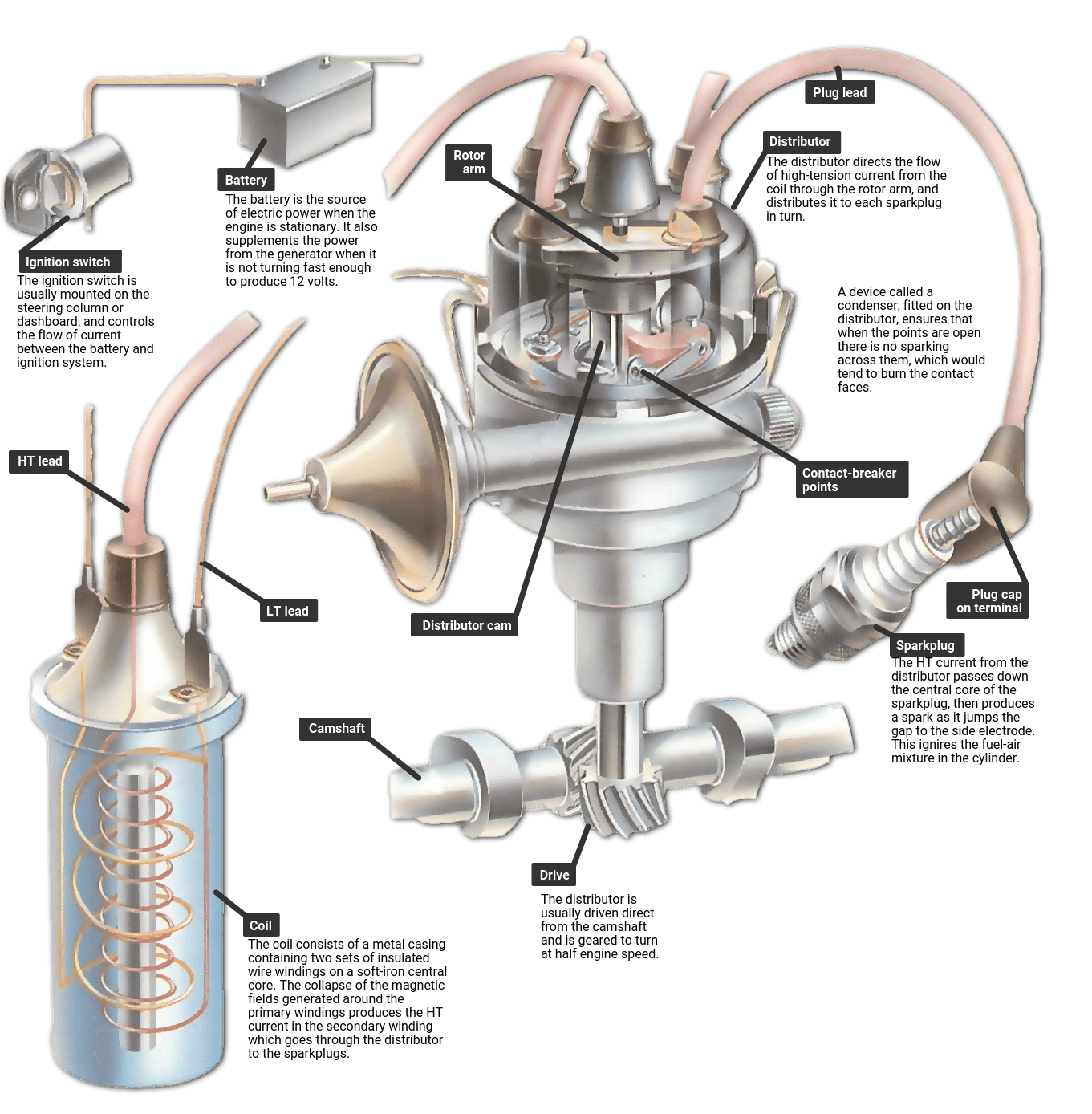
Figure 6: Ignition system components. Worn spark plugs, damaged coils, or distributor faults cause power loss and misfires under load.
4.4 Mitsubishi Chariot Engine Bay Reference
Below are OEM parts diagrams for the Mitsubishi Chariot (Space Wagon) engine components for reference during inspection.
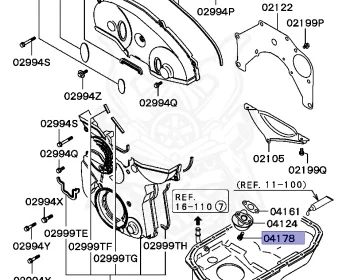
Figure 7: Mitsubishi Chariot D03W engine OEM parts diagram — timing cover and related components.
5 DIY Inspection & Tests
| Test / Inspection | How to Perform | What Result Means | Est. Cost |
|---|---|---|---|
| Air Filter Check | Remove filter and hold to light. If you cannot see light through it, replace it. | Clogged filter restricts airflow, reducing power. | $15 – $40 |
| Exhaust Back-Pressure Test | Have assistant hold RPM at 1800-2000. Feel exhaust at tailpipe. Should be strong and warm, not weak and burning hot. | Weak/hot flow = clogged catalytic converter. | $300 – $900 |
| Vacuum Hose Inspection | Visually inspect all rubber hoses near intake manifold for cracks, dryness, or disconnection. | Any leak causes lean mixture and power loss. | $10 – $50 |
| Fuel Pressure Test | Connect fuel pressure gauge to rail. Compare to spec (typically 38-45 psi at idle, higher under load). | Low pressure = weak pump or clogged filter. | $150 – $500 |
| Spark Plug Inspection | Remove plugs. Look for worn electrodes, oil fouling, or carbon deposits. Check gap. | Worn/fouled plugs cause misfires under load. | $30 – $100 |
| OBD-II Scan | Use a code reader to retrieve stored and pending codes. | Codes guide you directly to the faulty system. | $0 – $50 |
6 Prioritized Repair Recommendations
Based on frequency of failure for the Mitsubishi Chariot / Space Wagon experiencing uphill power loss, address issues in this order:
- 1. Catalytic Converter — If back-pressure test fails or P0420 is present, replace or inspect the converter. This is the #1 cause of load-specific power loss.
- 2. Fuel Pump & Filter — If fuel pressure is low, replace the in-tank fuel pump and inline filter. The Chariot's pump is known to weaken with age.
- 3. Vacuum Hoses — Replace all dry-rotted vacuum lines. This is a cheap fix that often resolves lean-condition power loss.
- 4. Air Filter & MAF Sensor — Replace the filter. Clean the MAF sensor with dedicated cleaner.
- 5. Ignition Components — Replace spark plugs and inspect coils/distributor cap and rotor if equipped.
- 6. Sensors — Replace TPS, MAF, or O2 sensors only if codes or live data confirm failure.
7 Summary
A Mitsubishi Chariot that cannot pick up speed uphill is most commonly suffering from a clogged catalytic converter or fuel delivery problem. The key diagnostic clue is that the symptom appears only under heavy load (uphill or hard acceleration), which points to a restriction or supply issue that becomes critical when the engine demands maximum output. Start with the cheapest inspections (air filter, vacuum hoses, OBD scan) and work toward the more involved tests (fuel pressure, exhaust back-pressure) before replacing major components.
⚠️ Important:
Continuing to drive with a severely clogged catalytic converter can cause engine overheating and damage to piston rings or valves. If you suspect a blocked converter, have it addressed immediately.